

Issue No. 60
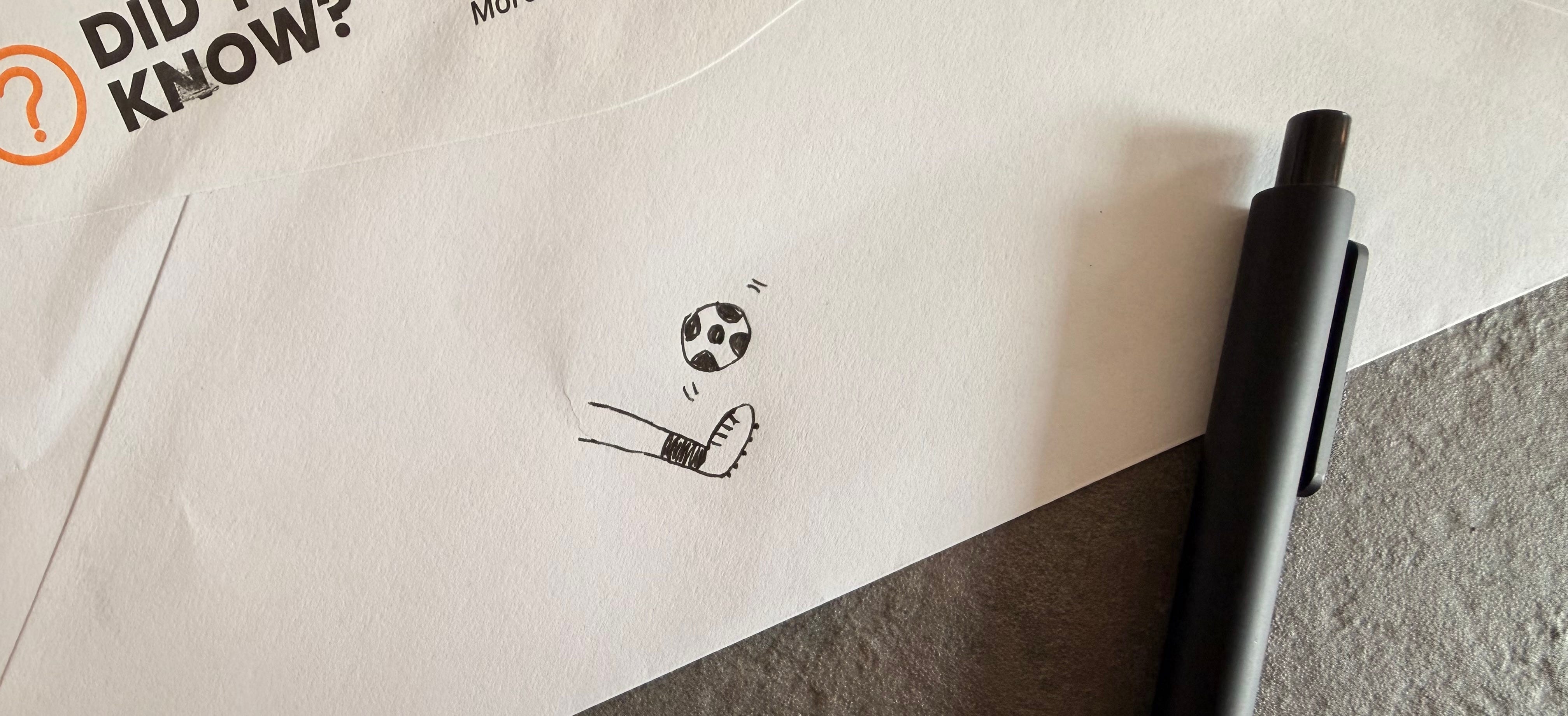
I started noticing something while playing soccer. For a few of us on the field, if ever we miss a shot on goal, we have a tendency to vocalize what we should have done in order to put the ball in the back of the net.1 Should have passed, should have taken a touch, should have cut back, should have done this or that.
Spelling out that pattern might look something like this:
Some real event happens (I passed the ball too late.)
I imagine an alternative happening (I passed the ball early.)
I rebuild the chain of events leading to that one with everything else unchanged and the imagined event slotted in (I got the ball, dribbled, passed early.)
I run the new chain of events forward and imagine a different outcome (I got the ball, dribbled, passed early, scored.)
I compare the two chains and the two outcomes and feel sad that I ended up with the worse outcome when, surely, the other outcome would have definitely happened, I tell myself, had I passed earlier.
It all seems really reasonable. You get an outcome you don’t like, you figure out what should have changed for you to have gotten a different one, and you make a note of that for next time.
That pattern is called counterfactual thinking. And just like the example from the soccer field, it involves switching out links in various chains of events and playing them back to imagine different outcomes. Notably, ones that almost happened had one thing gone slightly differently.
A few cautionary points, and then we’ll touch on how it might actually be a useful tool for thinking.
You never know what worse luck your bad luck has saved you from.
—Cormac McCarthy (No Country for Old Men)
Cautionary points
They can make us feel bad. In a study I read in preparation for this week’s issue, the authors give the example of Olympic medal winners at the 1992 Summer Olympics.
We videotaped all of the National Broadcasting Company (NBC) coverage of the 1992 Summer Olympic games in Barcelona, Spain. From this footage, two master tapes were constructed. The first showed the immediate reactions of all bronze and silver medalists that NBC chose to televise at the time the athletes learned how they had finished … The second tape consisted of all bronze and silver medalists whom NBC showed on the medal stand during the award ceremony.
They then had participants observe each athlete and rate on a 10-point agony-to-ecstasy scale each athlete’s reaction to winning.
When assessing the athletes’ immediate reactions, participants assigned the bronze medalists a mean happiness rating of 7.1 … but the silver medalists a mean rating of only 4.8 … When examining the athletes on the medal stand, participants assigned the bronze medalists a mean rating of 5.7 … and silver medalists a mean rating of only 4.3.
—Medvec, Madey, and Gilovich (1995)2
The authors couldn’t know for sure what any of these athletes were thinking, but their proposed explanation was that each medalist’s reaction was due to them comparing their actual outcome against some alternative.
The bronze medal winner might have been thinking to themselves, “I’m glad I wasn’t a tad slower. Otherwise, I wouldn’t have medaled.” By considering the downward imagined alternative, they’d end up feeling good about their actual outcome.
The silver medal winner, however, might have been thinking to themselves, “If only I had been a tad faster, if only this or that thing had gone slightly differently, I could have won gold.” Instead of feeling happy about winning a medal, they’d end up feeling horrible. That’s an upward comparison, and is similar to our soccer player with the missed goal from before.
What determines each person’s reaction in this case is the difference they perceive between what actually happened and what they’re certain almost could have happened had something gone differently. The alternative would be realizing that there’s a spread of probable outcomes with any one thing in life, including the things we think are in our control.
(In a later study, authors found that what also determines the comparison’s direction is expectation. A silver medalist expecting to win gold is more bummed than one who wasn’t expecting to medal at all. A 2020 study that used automated facial coding on medal stands from 2000 to 2016 found support for both accounts.)3
The imagined outcome might never happen, and just make us ruminate. In our everyday lives, we might get stuck in loops of unhelpful thoughts from replaying events and imagining how they might have gone differently. What if I had taken that job? What if I hadn’t broken up with that person? What if I hadn’t gotten sick that summer? There’s never a guarantee that the imagined, better, outcome would have actually occurred. With a toxic job, for instance, you never know what side-effects might have come from taking that job (the boss, the hours, the anguish) along with the better career prospects. You compare it to your current one and assume all other things between the two are exactly the same.
What is it good for?
So those are cautionary points to keep in mind when it comes to that pattern of thinking. On the flip side, there are some pretty decent advantages to it.
It can lower confidence, in a good way. If we’re planning for something, we might have a tendency to be overly confident in judging how the plan will go. According to one study,4 counterfactual thinking can help reduce a person’s inflated belief in a plan’s success. Participants were asked to evaluate an H1N1 flu epidemic plan using one of several methods, including:
Critique
Pro/cons generation
Cons only generation
A “pre-mortem”
That last one involved telling participants to imagine the plan had already failed and then generate reasons to explain why. The authors found that the last method reliably reduced confidence in the plan more than the other methods, roughly twice the drop produced by a method where participants were asked to come up with pros and cons for the plan. And once everyone came up with suggested fixes for the problems they’d identified, the “premortem” group’s confidence climbed the furthest too.
It can help us come up with more explanations. According to another study, thinking of an event as certain (irrespective of whether it has happened or not) can help us produce more reasons to explain it than we would have for uncertain events. In the study’s two experiments, participants generated 36% more reasons in one and 48% more reasons in the second, with a much higher proportion of those reasons being concrete and action-based rather than vague and abstract. More didn’t necessarily mean better, but it was still a useful outcome for merely switching one’s mental framing of a thing.
The authors give the following analogy about that shift of mindset that happens when we’re thinking about uncertain and certain events.
[C]onsider predicting the winner of the first basketball game of a championship series. Before the game predicting the winner is based on general factors: match-ups between key players, team strengths and weaknesses, etc. Even past games are used to identify factors relevant to the imminent contest. After the game it’s a different story. The defeat of one team is explained both by these general factors and by specific events like Player A’s early foul trouble, Player B’s ‘off-night’, too much inactivity since the team won its previous series, etc.
—Mitchell, D. J., Russo, J. E., and Pennington, N. (1989)5
So in summary, we get two useful effects when we run counterfactuals forward.
Imagining a future event as already settled puts us in a mindset that helps us reason more concretely about it.
Assuming a plan has already failed surfaces more problems with it, and fixing those problems brings our confidence back up.
Running counterfactuals backward is what we do automatically, and where they land depends on which direction we compare.
Comparing our outcomes upward to the better outcome can lead to regret.
Comparing our outcomes downward to the worse outcome can lead to contentment.
Finishing with our soccer player from the intro, he does his counterfactual thinking automatically, backward, and compares upward, which is why it doesn’t feel good in the moment. One idea for him would be to run the counterfactual forward instead. Before a match, imagine he’s already missed the chance and work out what caused it.
A short note on walking
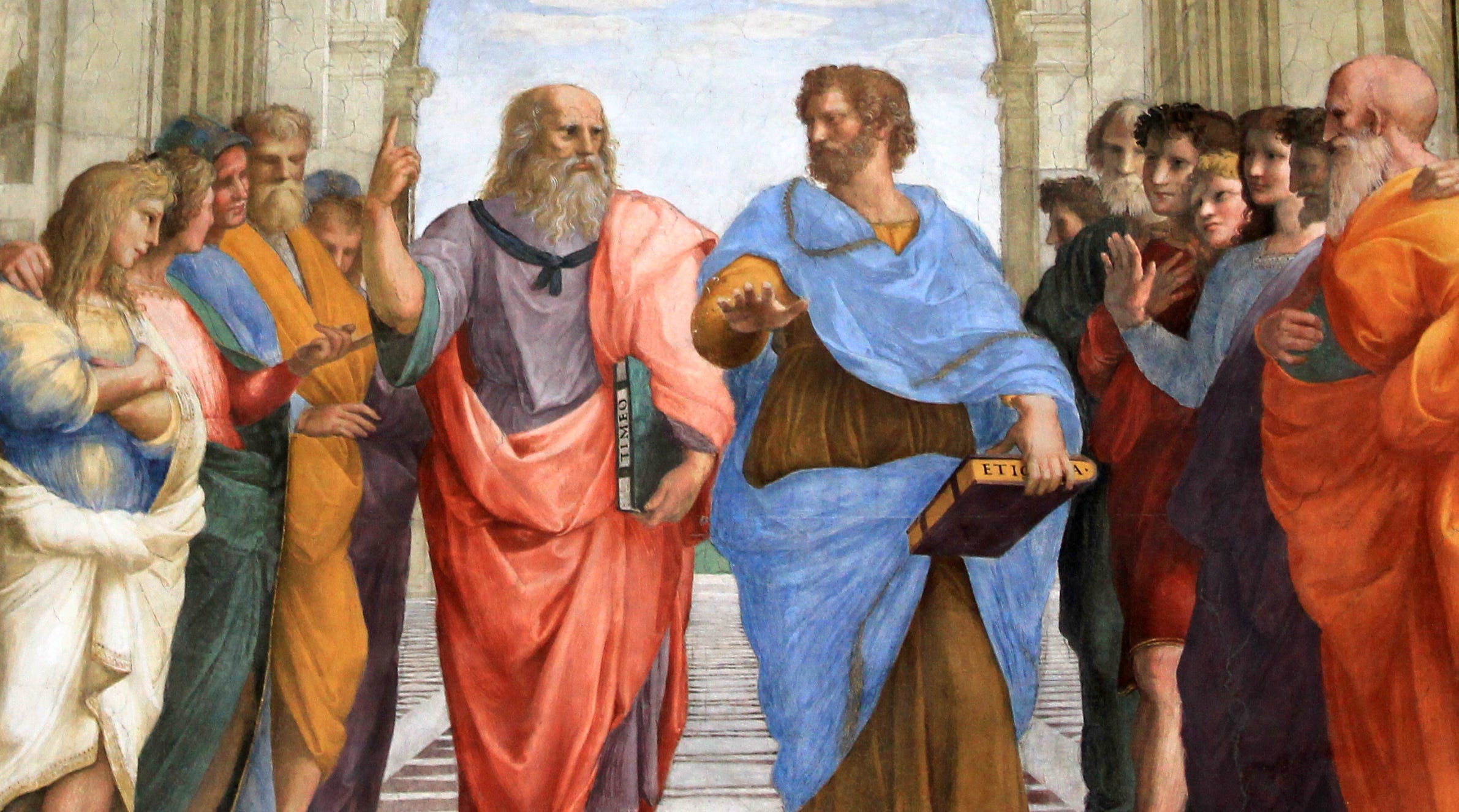
I learned that Aristotle founded the Peripatetic School. Peripatētikós in Ancient Greek means “given to walking about” and either refers to the walkways of the Lyceum in Athens where he taught or, per a later account, to his habit of pacing the grounds while teaching.
Kierkegaard walked Copenhagen. Rousseau wrote Reveries of the Solitary Walker. Dickens walked the streets of London late at night and into the morning and wrote Night Walks.
In a letter to his niece, Kierkegaard shares, “Above all, do not lose your desire to walk: every day I walk myself into a state of well-being … I have walked myself into my best thoughts, and I know of no thought so burdensome that one cannot walk away from it.”
Until next time.
Be well,
Ali
P.S. Some past issues to read through in case you missed them.


When I say “we,” I mean “I.”
Medvec, V. H., Madey, S. F., & Gilovich, T. (1995). When less is more: Counterfactual thinking and satisfaction among Olympic medalists. Journal of Personality and Social Psychology, 69(4), 603–610. https://www.researchgate.net/publication/15726123
McGraw, A. P., Mellers, B. A., & Tetlock, P. E. (2005). Expectations and emotions of Olympic athletes. Journal of Experimental Social Psychology, 41(4), 438–446. https://leeds-faculty.colorado.edu/mcgrawp/pdf/mcgraw.mellers.tetlock.2005%20(1).pdf
Hedgcock, W. M., Luangrath, A. W., & Webster, R. (2021). Counterfactual thinking and facial expressions among Olympic medalists: A conceptual replication of Medvec, Madey, and Gilovich’s (1995) findings. Journal of Experimental Psychology: General, 150(6), e13–e21. https://pubmed.ncbi.nlm.nih.gov/33166162/
Veinott, B., Klein, G. A., & Wiggins, S. (2010). Evaluating the effectiveness of the PreMortem technique on plan confidence. Proceedings of the 7th International ISCRAM Conference, Seattle, WA. https://idl.iscram.org/files/veinott/2010/1049_Veinott_etal2010.pdf
Mitchell, D. J., Russo, J. E., & Pennington, N. (1989). Back to the future: Temporal perspective in the explanation of events. Journal of Behavioral Decision Making, 2(1), 25–38. https://www.researchgate.net/publication/227768493
I like how you have connected lines of reasoning to how it may bring you to a certain emotional state, regret or contentment. Being aware of the balance logic and emotional states can help us become famaliar with the uncomfortable.